A brief history
Stavanger Maritime Museum marks its 100th anniversary through 2026.
Stavanger city is built around Vågen, the harbor. At Stavanger Maritime Museum you encounter the story of life in the harbor—who has worked there, what people and goods the harbor has welcomed through the years, and where those who left the harbor went. Adventurous and exciting stories about life in and around the harbor await visitors to Stavanger Maritime Museum.
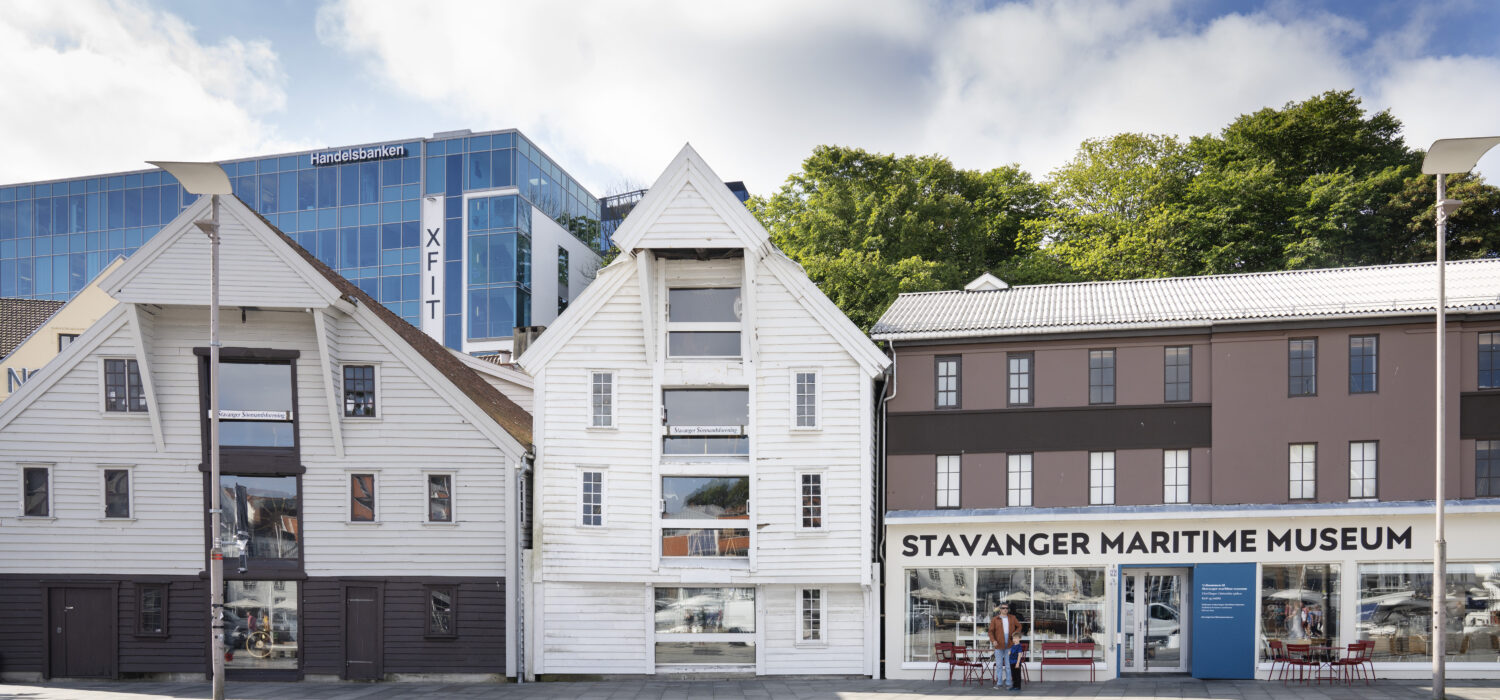
The museum is housed in historic warehouses and merchant houses, in the heart of Vågen on Strandkaien, in Stavanger city centre.
At Stavanger Maritime Museum you can also experience Stranden Colonial — a setting of a shop and tea salon, one of the bourgeoisie’s apartments, a shipping-offices, and a sailmaker’s loft as it might have been in the 1800s. And if you come with children and families, you can dress up and pretend to be a proper sailor on the quay.
Founding and history
December 18, 1926: The Stavanger Maritime Museum’s exhibitions opened to the public in rented premises at Stavanger Museum on Muségaten 16. The aim was to increase general interest in and knowledge of shipping and other maritime industries. The museum would collect and preserve artifacts, archives, and other material documenting the city’s seafaring history and its importance for the region’s economy and cultural life. The goal was to facilitate this material for research and make it accessible to the public.
For almost 30 years the Maritime Museum was unmanned. In 1954 the museum gained its own director. By the mid-1960s activity increased significantly, especially in relation to marine archaeology. This led, in 1969 by royal resolution, to the museum taking on responsibility for the management of underwater cultural heritage in Rogaland. In 1973 the yacht Anna af Sand was donated to the museum by shipowner Torolf Smedvig, and in 1984 the Colin Archer schooner Wyvern was donated by the Norwegian oil industry.
In 1985 the museum opened new permanent exhibitions in the restored merchant houses Nedre Strandgate 17 and 19. Through exhibitions, education, lectures, and family events, the museum expanded its offerings to schools and the public. The museum collaborates with many associations and organizations that work to promote coastal culture and maritime history, locally, nationally, and internationally.
On July 1, 2012, the museum’s name changed from the Sjøfartsmuseet to Stavanger Maritime Museum.
In 2026 the museum celebrates its 100-year anniversary with a range of events and activities. Parallel to this, in collaboration with Stavanger Municipality, work is underway to rehabilitate parts of the building stock that today are not in a condition suitable for museum purposes.